# Introduction

WILD is on a mission to become the world’s largest animal registration and pet care management platform. The project combines artificial intelligence (AI) technology with Web3 infrastructure to create a powerful platform ecosystem designed to transform the $300B pet care industry. We believe that AI for image recognition and classification, combined with blockchain technology's immutable and transparent nature, will become a standard future infrastructure.

Our strategy is to gain a first-mover advantage by issuing W3C-compliant decentralized identifiers (DIDs) for animals to generate digital identification proofs for individual animals. Doing so will help researchers understand animal behavior, ecology, and population dynamics better. Additionally, such technologies will enable pet owners and veterinary professionals to manage the care and well-being of pets.

WILD Platform is a decentralized application (dApp) that allows users to capture animal-specific images (the subject) and upload them for processing using WILD’s proprietary Animal Vision AI (AV-AI) algorithm. Once processed, the platform utilizes AI-driven biometrics to generate a unique Animalistic Decentralized ID (ADID) stored on the Ethereum blockchain using OP Mainnet, an EVM equivalent layer-2 scaling solution.

These ADIDs are then tied to user-supplied data about the subject animal so that projects approved to operate on the WILD Platform may access application-specific approved data once the user has granted permission. No animal-specific information is exposed on the blockchain.

WILD onboards new projects onto the ecosystem. During onboarding, projects are assessed to understand their specific use cases. The output of this assessment determines their user data permissions. Enhanced privacy protections based on zero-knowledge (ZK) technology ensure that the contents of ADID documents match the required constraints without revealing information about the animal subject or its owner.


# What is WILDCOIN

WILDCOIN is the decentralized finance (DeFi) lifeblood that fuels the WILD Platform and is the primary focus of this paper. WILDCOIN is an ERC-20 token built on OP Mainnet.\[1] OP Mainnet is a layer-2 scalability platform specifically designed to provide faster transactions at a fraction of the cost, helping to address Ethereum's scalability issues.

The token has DeFi features written into the code (solidity) in that it is ownable, stakeable, and burnable with a known total supply and an immutable maximum supply and maximum fee structure. The WILDCOIN smart contract\[2] is built on a peer-to-peer network, allowing it to be read, authenticated, and verified by anyone with access to an internet connection.

*WILDCOIN is inspired by "Worldcoin,"* a project designed to become the world's largest privacy-preserving human identity and financial network, giving everyone ownership. It aims to provide universal access to the global economy regardless of your country or background, establishing a place for all of us to benefit in the age of AI. It is well known that this effort will have a tremendous global impact on humanity.\[3]

*WILDCOIN differs from Worldcoin in focus.*

While both projects aim to enhance the human experience, WILDCOIN achieves this through animal preservation and pet care management. Animal preservation is essential to the human experience and the key to maintaining a healthy ecosystem balance on Earth. Our vision is to use technology to preserve biodiversity, food security, economic sustainability, social impact, and climate regulation. We believe that animal preservation starts with registration.

Our go-to-market strategy relies on addressing pet care-specific problems while tapping into digital currencies' rapid growth to create early adoption momentum for the WILD Platform.


# Ecosystem Challenges

Animal preservation and biodiversity are essential to maintaining Earth's atmospheric conditions. The WILD Platform is part of a broader vision for preserving biodiversity through animal identification and maintenance. Looking at the broader ecosystem challenges gives us a better understanding of why animal preservation is critical to society's future. We believe that biodiversity, food security, economic impact, social value, and climate regulation are all measurable byproducts of animal preservation through technological advances.

## Biodiversity and Ecosystem Services: <a href="#sgqwg6hh4dcv" id="sgqwg6hh4dcv"></a>

**Pollination:** Approximately 75% of the world's flowering plants and about 35% of the world's food crops depend on animal pollinators to reproduce. These include more than 3,000 species of plants that humans use for food and many others for spices, beverages, and medicines. Without animal pollinators, many of these plants would fail to reproduce, leading to drastic reductions in crop yields and the foods available for human consumption.\[4] \[5]

**Nutrient Cycling:** Animals are critical in cycling nutrients like carbon, nitrogen, and phosphorus. Earthworms, for instance, help enhance soil fertility by breaking down organic matter. Estimates suggest that worms can process around 10 tons of soil in one acre of land to improve nutrient cycling.

Technologies such as AV-AI have the potential to transform biodiversity efforts by helping researchers and agricultural workers identify and track animal pollinators to manage and measure pollination sustainability efforts. Such advancements may also help determine the optimal mix of nutrient cyclers for a given environment.

## Food Security, Traceability, and Economic Impact <a href="#id-2xajiygv9xag" id="id-2xajiygv9xag"></a>

The Food and Agriculture Organization (FAO) of the United Nations estimates that fisheries and aquaculture assure the livelihoods of 10-12% of the world's population, and over 50% of the world's poor people rely directly or indirectly on agriculture, including animal husbandry, for their livelihoods.

Livestock alone provides food that contains essential nutrients not easily obtained from plant-based sources. For example, livestock accounts for about 15% of total food energy and 25% of dietary protein consumption globally.\[6]

The livestock sector contributes up to 40% of the global value of agricultural output and supports the livelihoods and food security of almost 1.3 billion people. In many developing countries, livestock can account for between 20 to 40% of agricultural GDP.\[7]

Pesticides, hormones, and the well-being of agricultural products are a growing concern among consumers. Consumers have little to no information about the history, medical treatments, and living conditions of the animal products served at the dinner table.

ADIDs are a noninvasive method of identification that can help farmers, livestock professionals, and researchers identify specific animals without harm or endangerment. They are stored on the blockchain and tied to information relating to the subject animal, which can provide greater visibility into food sources and consumer products, allowing consumers greater control over what they consume.

## Cultural and Social Value: <a href="#qns2v3hwlaro" id="qns2v3hwlaro"></a>

Animals are deeply ingrained in many cultures as symbols of strength, fertility, and beauty. They also play key roles in religious ceremonies and community traditions worldwide. Pets, particularly dogs and cats, serve as companions and family members, contributing to mental health and well-being. Studies have shown that interacting with animals can decrease levels of cortisol (a stress-related hormone) and lower blood pressure.\[8]

We believe the WILD Platform can improve the pet ownership experience by allowing owners greater control over their pets' well-being. The WILD dApp enables caregivers to upload data such as pet medical records so that owners can always access information necessary to validate vaccinations, ailments, and proof of ownership.

The WILD dApp will provide pet owners with educational training material, healthy habit tracking, and the ability to share information about their pets for social engagement. We hope to increase pet adoption, ownership, and social engagement, leading to a better quality of life for pets and their people.


# The WILDCOIN Project

## The WILDCOIN Project <a href="#cmidjx6hhsw1" id="cmidjx6hhsw1"></a>

The WILDCOIN project will serve as a launchpad for the broader development of the WILD Platform. WILDCOIN is the financial lifeblood of the WILD Platform. The project's primary goal is to launch an ERC-20 token enabling network participants to access DeFi features that benefit WILD Ecosystem stakeholders such as users, project members, partners, and contributors.

By combining artificial intelligence (AI) with Web3 technology, we aim to perform research and development on early-phase technology to address key challenges for pet owners, veterinarians, and researchers.

Performing research on such technologies requires financial backing to pay for resources such as processing power, data storage, engineering manpower, designers, marketing, and administrative staff. Subsequently, WILDCOIN, in the early stages, will be focused on token distribution, project management, and developing a prototype sufficient to understand the market needs and conditions.


# Market & Initial Use Case

According to Markets and Markets, the global decentralized identity (DID) market value is estimated to reach $6.8 billion by 2027. Until now, most of the information and product development surrounding DIDs has focused on humans. WILDCOIN is focused on applying DIDs to cases involving animals. Our approach involves identifying and addressing problems within the $300B pet care industry using ADID technology.

*WILDCOIN is unleashing the combined power of Web3 and AI to revolutionize the $300B pet care industry.*

## Preventative Pet Care Use Case <a href="#wdjiwgg2u28p" id="wdjiwgg2u28p"></a>

One such use case involves addressing pet abandonment due to a lack of awareness surrounding preventative pet care treatment methods.

### Key Statistics: <a href="#id-5gmshfkswx73" id="id-5gmshfkswx73"></a>

* The number of dogs globally is growing. In 2012, the total population of dogs in the world was estimated to be about 525 million; today, that number is estimated at 900 million, with nearly 471 million being kept as pets (52%)\[9]
* There are approximately 89.7 million dogs in the United States, with 66% of U.S. households (86.9 million homes) owning a pet.\[10]
* As of 2022, roughly 4.8 million pets are insured, meaning that roughly 5% of dogs are insured, leaving a 95% insurance coverage gap for the total dog population (assuming all pets insured are dogs).
* According to a Forbes Advisor survey on pet costs and inflation, nearly two-thirds (63%) of pet owners said they would have difficulty paying a surprise vet bill amid inflation. More than a quarter of pet owners (28%) said a vet bill of $499 or less would cause them to go into debt, while a bill of $999 or less would cause 42% to go into debt.\[11]
* Approximately 6.3 million companion animals enter U.S. animal shelters nationwide every year. Of those, approximately 3.1 million are dogs, and 3.2 million are cats.\[12]
* Approximately 65% of dogs entering shelters are adopted, and 13% are euthanized. Similarly, approximately 66% of cats entering shelters are adopted, and 17% are euthanized.\[13]

## The Problem of Pet Abandonment <a href="#id-2mof103n429j" id="id-2mof103n429j"></a>

Pet abandonment is a serious problem affecting roughly 6.3 million companion animals annually. Multiple studies have been conducted, and the research shows that a primary factor in this decision is owners' inability to afford veterinary costs or to find affordable pet-friendly housing.\[14]

Several factors contribute to pet abandonment, including high costs of veterinary treatment for serious issues, demographic disparities, lack of awareness of affordable alternatives, and educational gaps. Cost is the largest barrier to veterinary care. Unfortunately, most pet owners lack information about the long-term benefits of routine veterinarian visits and access to affordable veterinary care facilities.

Routine veterinary visits prevent, diagnose, and treat pet problems or diseases. Additionally, a significant correlation exists between demographic disparity and the availability of affordable care options. Typical barriers include cost of care, transportation, hours of operation, language differences, poor previous encounters with veterinarians, lack of trust in veterinarians, dog owners providing healthcare for their dogs themselves, and/or dog owners not believing veterinary care is necessary.

### **Financial Barriers to Veterinary Care**

The high cost of veterinary services is a major obstacle for pet owners, leading to a lack of necessary medical care and, in some cases, pet abandonment.

### **Lack of Awareness of Low-cost Services**

Pet owners are unaware of available low-cost veterinary services, contributing to underutilization and increased pet health risks.

### **Demographic Disparities in Access to Care**

Variations in utilizing veterinary services across different demographics indicate inequalities in access to care, underscoring the need for targeted outreach.

### **Perceptions and Behavioral Challenges**

Misconceptions about pet health needs and behavioral barriers, such as the perceived stress of veterinary visits on pets, deter owners from seeking care.

### **Educational Gaps**

Many pet owners lack knowledge about the importance of routine veterinary care, highlighting the necessity for educational initiatives.

Based on our research to understand these factors, we believe that there is a significant opportunity to educate pet owners on the importance of preventative care, proper daily care, and veterinary services in addressing the issue of pet abandonment.\[15] \[16] \[17]


# ADID Technology

## Animalistic DID (ADID) Technology <a href="#xdgrccfu6gxc" id="xdgrccfu6gxc"></a>

The WILDCOIN project is applying DIDs, a technology typically used for people, to animals. ADIDs use blockchain technology to create unique, immutable IDs for animals. The key purpose of an identity system is to authenticate *animal subjects* (the subject) for the purpose of storing unique identification traits and pairing these traits with data.

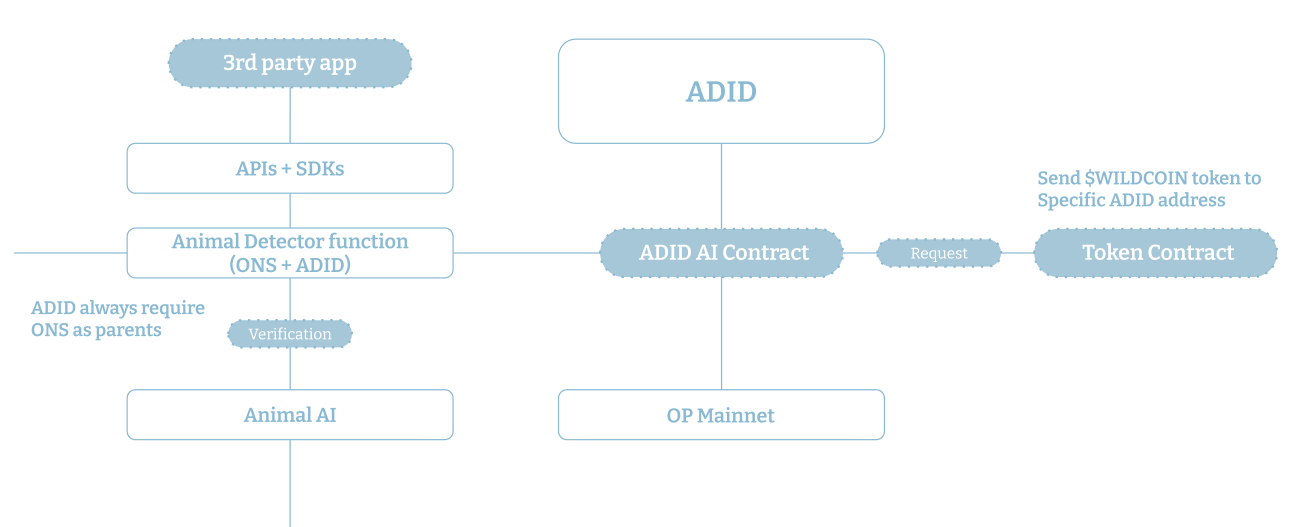
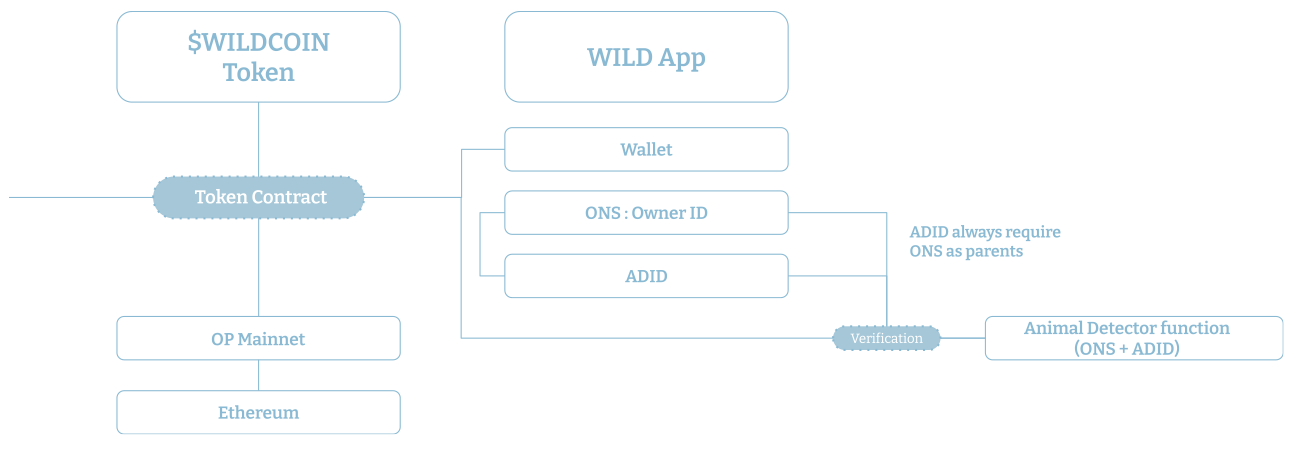
In the case of ADIDs, users i.e. pet owners, caregivers, and researchers, authenticate themselves using an owner name service (ONS) connected to the WILD dApp hosted on a smartphone or similarly enabled device. Once authentication has been completed, the user then performs a biometric scan of the *subject*, which captures and uploads various images into the system for processing, storage, and retrieval.

<figure><img src="https://1100465062-files.gitbook.io/~/files/v0/b/gitbook-x-prod.appspot.com/o/spaces%2FH0bZggDiPwW180Ib9C9c%2Fuploads%2Fg10Do6cvEsfMr2iufw5K%2F1.png?alt=media" alt="" width="413"><figcaption><p><em><strong>Animalistic DID Architecture</strong></em></p></figcaption></figure>

At a high level, ADID employs AI to detect distinct features unique to each subject. For example, ADIDs may leverage AI-based nose print recognition—a mammalian trait—and unique photographic analysis techniques to distinguish unique identifiable characteristics.


# WILD dApp

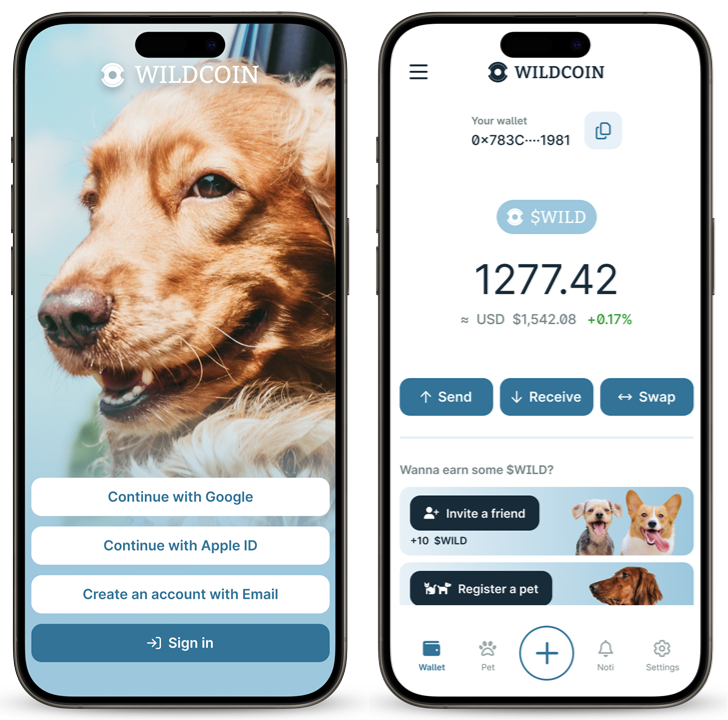
WILD dApp is the sole method for earning WILDCOIN (the token) and is directly linked to the subject’s ADID. WILD dApp serves as an interface for utilizing the token, facilitating several key functions such as:

1. **Register Animals and Issue ADIDs**: Users register *animal subjects* in the WILD Platform, which generates a unique ADID.
2. **Allocate and Notify WILDCOIN**: WILDCOIN are issued for each ADID issued, and users are notified of the transaction.
3. **Task Completion Reward** Users are assigned various tasks within the WILD dApp. By completing these tasks, such as answering questions about the subject attributes, preferences, and traits, users earn and receive WILDCOIN.
4. **Participate in DAO Decisions**: WILDCOIN holders can participate in DAO governance using the WILD dApp.
5. **WILD dApp Crowdfunding:** Pet owners, caregivers, and researchers may propose projects for crowdfunding initiatives such as medical treatments, procedures, and research. To initiate crowdfunding, users must meet in-app social credit rating requirements based on previous data and activity.

<figure><img src="https://1100465062-files.gitbook.io/~/files/v0/b/gitbook-x-prod.appspot.com/o/spaces%2FH0bZggDiPwW180Ib9C9c%2Fuploads%2F95wEl2bMiQXzEoudDnXM%2Fimage.png?alt=media&amp;token=552961ab-0ddb-4641-a540-7fc420cc9060" alt="" width="546"><figcaption><p><em><strong>WILD dApp Interface (Conceptual Design)</strong></em></p></figcaption></figure>


# Owner Name Service (ONS)

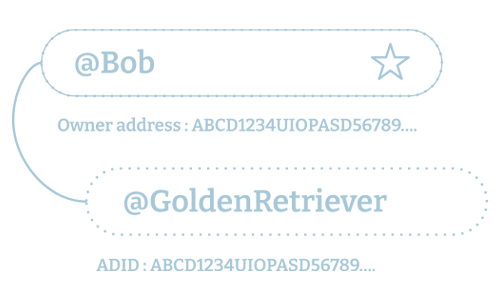
The Owner Name Service (ONS) is a naming service for owners registering subject animals (pets). All ADIDs are associated with an ONS, and one ONS may contain multiple ADIDs. Additionally, ADIDs can be transferred between owners to transfer animal ownership. For example, an ONS could be @"Bob."

<figure><img src="https://1100465062-files.gitbook.io/~/files/v0/b/gitbook-x-prod.appspot.com/o/spaces%2FH0bZggDiPwW180Ib9C9c%2Fuploads%2FVCkTFYrNFMjEcWWyiU6q%2F3.png?alt=media" alt="" width="375"><figcaption><p><em><strong>ONS Service</strong></em></p></figcaption></figure>

ADID transfers require verification through a Web3-specific confirmation process. This process is designed to provide a trustless, robust, and secure means of facilitating ownership transfers.


# Proof of Animal (POA)

**Proof of Animal (POA) Consensus Mechanism**

The platform has implemented an AI-driven verification process to safeguard against ONS manipulation. These processes gather consensus from verifiers, thereby establishing an immutable system designed to maintain secure and reliable ADID records. This methodology is termed "PoA = Proof of Animal." PoA is deployed on the OP Mainnet connected to the Ethereum blockchain.

The WILD Platform’s architecture incorporates a stake-and-verify model. Verifiers must maintain a security deposit in WILDCOIN to participate in the ADID verification process. Manual verification of subject animals or ONs records may be required from time to time. For example, a user may submit an ownership dispute for a subject animal that has been fraudulently submitted to the platform. Alternatively, verifiers may need to review and approve legitimate ADID creation for any subject animal registering a false positive identity record. In exchange for these services, verifiers earn WILDCOIN.


# Animal Vision AI (AV-AI)

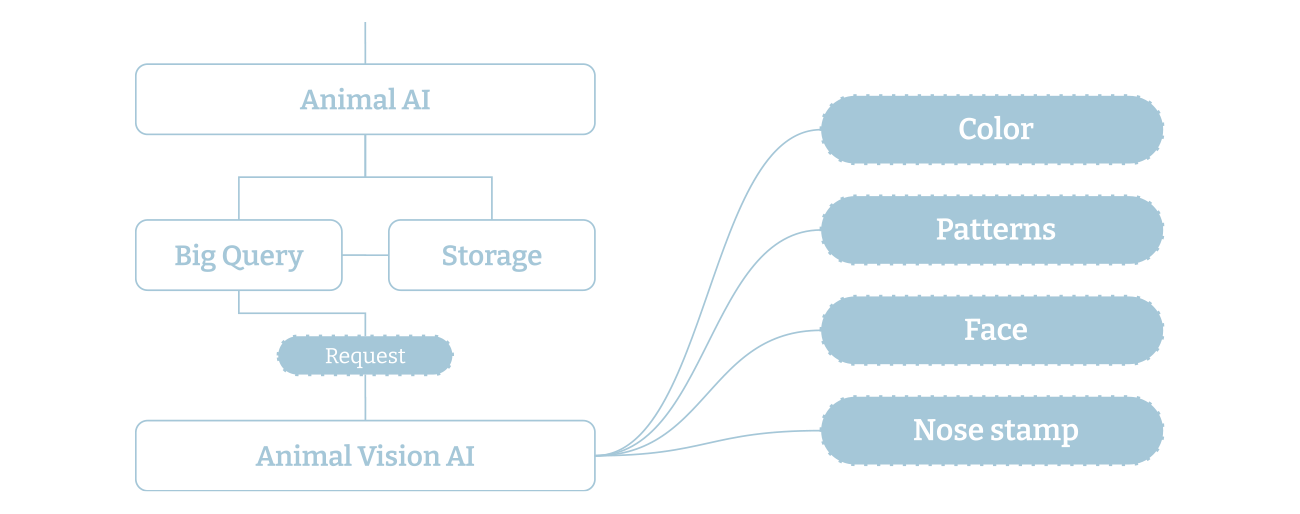
Subject images submitted through WILD dApp are processed using AV-AI, a state-of-the-art biometric scanning and image processing system that combines advanced facial recognition, pattern recognition, and posture analysis. AV-AI utilizes a dual deep-learning approach:

## **FaceNet512**

FaceNet512 is an advanced facial recognition model based on the Inception-ResNet-v1 architecture, which combines concepts from both Inception networks and Residual networks. Originally designed for human facial recognition, FaceNet512 has been adapted and fine-tuned for animal facial feature extraction. It generates a 512-dimensional embedding vector that captures unique identifying characteristics of animal faces. This high-dimensional representation allows for precise differentiation between individual animals, even within the same species or breed.

## **CLIP (Contrastive Language-Image Pre-training)**

CLIP is a powerful vision transformer model that excels in general visual feature extraction and potential breed classification.

This combination allows for comprehensive animal identification, encompassing facial features, body patterns, and structural elements. Pose estimation models are integrated to analyze body structure and posture, providing additional identifying characteristics.

The system processes each image to extract a rich, multi-faceted feature vector. This vector, along with associated metadata, is stored in a high-performance vector database, enabling efficient similarity searches and rapid retrieval for animal identification and matching.

Once the AV-AI has successfully processed the images, a unique digital identifier (DID) is generated for the *subject animal* based on the subject’s biometric patterns and stored for future reference.

<figure><img src="https://1100465062-files.gitbook.io/~/files/v0/b/gitbook-x-prod.appspot.com/o/spaces%2FH0bZggDiPwW180Ib9C9c%2Fuploads%2F6LcT3o026eSeBWb83Vfd%2Fimage.png?alt=media&amp;token=70dc3963-c1ed-4d08-b075-9baa099e94d9" alt="" width="563"><figcaption><p><em><strong>AV-AI Conceptual Diagram</strong></em></p></figcaption></figure>

## Animal Attributes <a href="#rl01pynezu7x" id="rl01pynezu7x"></a>

Users complete a series of prompts designed to capture attributes relating to the *subject animal* that are not available to the biometric scanning output, such as age, sex, home address, etc. Additionally, users complete data entries relating to preferences such as pet food, medical issues, treatment routines, vaccination records, etc.

## ADID Record Retrieval <a href="#cbzoegx196jx" id="cbzoegx196jx"></a>

AV-AI is designed to perform a subject recognition sequence to determine whether the subject is already stored in the database. For example, Bob finds a dog on the roadside. The dog doesn’t have a collar with owner-specific identification. Bob takes the dog to the animal shelter. Animal shelter staff scan the dog’s microchip, which has been placed but is no longer functional. As an alternative, the shelter scans the animal using WILD Platform’s AV-AI. The images are processed, and a DID has already been assigned to the dog. The owner Sally’s contact information is available on the network, and the shelter calls her to come and retrieve her pet.

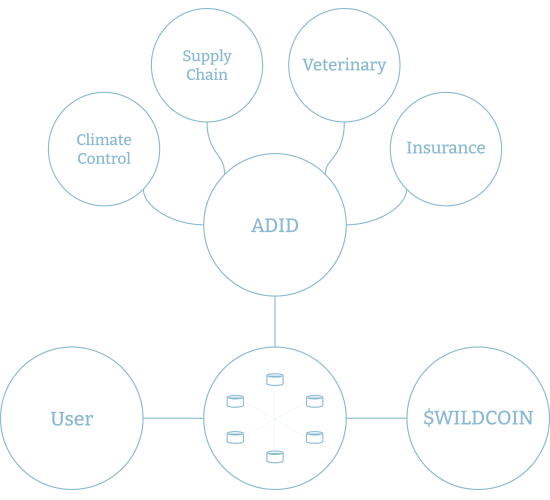
<figure><img src="https://1100465062-files.gitbook.io/~/files/v0/b/gitbook-x-prod.appspot.com/o/spaces%2FH0bZggDiPwW180Ib9C9c%2Fuploads%2FyOSRB6YxLU9e9mFE9wjV%2Fimage.png?alt=media&amp;token=61452ab2-099c-4ebc-b96e-597944613489" alt="" width="563"><figcaption><p><em><strong>WILD dApp Architecture</strong></em></p></figcaption></figure>


# WILDCOIN Farming

WILDCOIN (the token) is a utility and governance token. Subject ADIDs are awarded a certain number of tokens upon registration. Users are assigned specific tasks to continue receiving tokens; upon completing these tasks, they will receive additional tokens.

<img src="https://1100465062-files.gitbook.io/~/files/v0/b/gitbook-x-prod.appspot.com/o/spaces%2FH0bZggDiPwW180Ib9C9c%2Fuploads%2FeOW7MlvMtNmzkBFVNgHe%2F6.png?alt=media" alt="WILDCOIN Architecture" width="563">

## Typical WILDCOIN Earning Example <a href="#bvarkzpsdq40" id="bvarkzpsdq40"></a>

Bob scans his dog Sparky (the subject) using the WILD dApp. The AV-AI processes the images, issues an ADID, and stores data relating to the subject’s recognizable traits and characteristics. Bob earns WILDCOIN for registration.

Bob is prompted to review and confirm information that the AV-AI has identified, such as breed, color, unique markers, etc. Bob earns WILDCO for confirming this information.

Bob is prompted to input additional information that the AV-AI is unable to identify, including Sparky’s name, DOB (or age), sex, and other information. Bob earns WILDCOIN for entering this information.

Bob shares Sparky’s ADID with his veterinarian, and the ADID is accessible within the veterinarian’s ADID-enable animal resource management (ARM) system. His veterinarian enters all pertinent historical medical record data associated with Sparky, including checkup history, vaccination records, medications, feeding recommendations, and dog-specific care.

WILD dApp reviews this information and creates a daily care checklist for Sparky. The checklist sends Bob notifications to remind him when to feed Sparky, give him his medication, and take him for preventative care treatments. Each time Bob completes a subject-related task, he takes a photo using the app, which is timestamped and uploaded to the system. Bob earns WILD Rewards for these activities, and these rewards are auto-converted and settled in WILDCOIN at the end of each day.

## Pet Care Staking Opportunities <a href="#hao7oic8h0yi" id="hao7oic8h0yi"></a>

Bob has to go out of town on a business trip and doesn’t have a reliable caregiver for Sparky during that time. Alice lives nearby and has an excellent social credit rating on the WILD dApp. Bob messages Alice to ask whether she can care for Sparky for the duration of this business trip. Bob shares Sparky’s ADID information, and she reviews her daily care checklist to determine her obligations. Alice agrees to watch Sparky in exchange for nWILDCOIN per day, which are staked on the smart contract for settlement upon Sparky’s return. Bob and Alice agree to the terms, and Sparky’s ADID, medical records, and veterinarian care information are temporarily transferred to Alice. Alice gives Sparky food, water, and medication as needed and earns the wild rewards and subsequent tokens Bob would have received for Sparky’s daily care.

### **Scenario 1 Happy Path**

When Bob returns, he and Alice initiate the protocol’s smart contract completion sequence by completing the in-app procedure. Control of Sparky’s is returned to Bob’s wallet, and the staked WILDCOIN are transferred to Alice’s digital wallet. Alice also receives a social credit-score approval rating for Sparky’s care, calculated by a weighted average of Bob’s satisfaction rating and the checklist activity completion rate for Sparky’s daily care routine.

### **Scenario 2 Punishment Path**

When Bob returns, Sparky seems sick, and Alice hasn’t given him his medication. Bob registers a complaint within the system, and the smart contract’s AI-driven Oracle logs the issue and recommends how many WILDCOIN Alice should forfeit. Alice’s social credit rating is affected by this decision, and she must complete animal care training before she can resume caring for pets. If Sparky’s issue is severe enough, Alice may be de-platformed completely, or the authorities may be called to investigate animal abuse.


# DAO Governance

WILD dApp will be governed by a Decentralized Autonomous Organization (DAO). Specifically, community projects are reviewed for WILDCOIN holders to make decisions related to community support efforts.

Suppose the community votes to support a project. In that case, 10% of the pool of WILDCOIN is distributed within the ecosystem: 5% is returned to WILDCOIN holders who participate in voting, and the remaining 5% is allocated to the development of the WILDCOIN ecosystem.
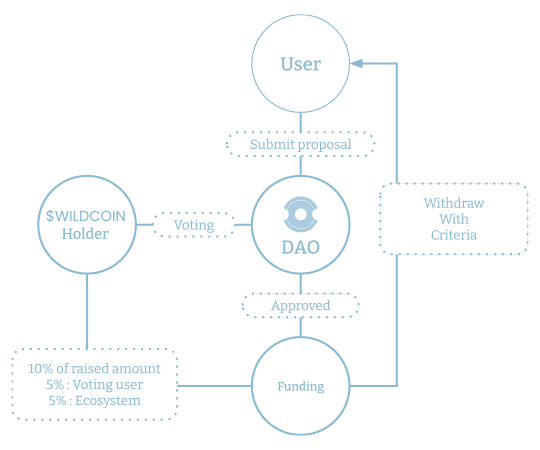
<figure><img src="https://1100465062-files.gitbook.io/~/files/v0/b/gitbook-x-prod.appspot.com/o/spaces%2FH0bZggDiPwW180Ib9C9c%2Fuploads%2FVWlkguyReoAJB1ZORIje%2F7.png?alt=media" alt="" width="405"><figcaption><p><em><strong>Simplified WILD dApp DAO Community Governance</strong></em></p></figcaption></figure>

## Example Community-supported Project: <a href="#id-8c0ajr7cmh2j" id="id-8c0ajr7cmh2j"></a>

Bob takes his Sparky to Carol, the veterinarian. Sparky swallowed an object that required surgery. Carol says the procedure will cost USD 2,000. Bob doesn’t have the money to pay for the surgery, and without it, Sparky will have to be euthanized. Bob has never missed a preventative care appointment, feeds Sparky regularly, and gives him plenty of clean drinking water. Carol writes her recommendation within the ARM system (mentioned above). This recommendation is tied to Sparky’s ADID, and Bob submits his community support request through the WILD dApp. The project is voted on and funded by users with WILDCOIN, and the token is deposited into Bob’s wallet to pay Carol for the procedure, medication, and follow-up appointments.

Bob makes regular payments, including the agreed-upon interest rate, to repay the outstanding balance. By paying his outstanding loan balance on time, Bob builds his WILD Social Credit Score and can submit future loan applications.


# Tokenomics

The WILDCOIN is a utility token with governance features. Using WILDCOIN, you can vote for decision-making within the WILDCOIN ecosystem and purchase items related to animal conservation.

The following is information on the tokenomics of WILDCOIN.

WILDCOIN has a maximum supply of 100 billion tokens, an initial supply of 50 billion tokens minted, and an initial price per token of $.0007. The coin has a market cap of $35M and a fully diluted value of $70M.

***Table 1: WILDCOIN Tokenomics***

<table data-header-hidden><thead><tr><th width="205"></th><th></th></tr></thead><tbody><tr><td>Launch date</td><td>July 2024</td></tr><tr><td>Network</td><td>OP Mainnet</td></tr><tr><td>Contract Address</td><td>0x95EC2f13ea96251C7037EcC0C2A25Ea7D6bE520b</td></tr><tr><td>Total supply (Max)</td><td>100,000,000,000 *One Hundred Billion</td></tr><tr><td>Initial supply: 50%</td><td>50,000,000,000 *Fifty Billion</td></tr><tr><td>Price per token</td><td>$0.0007</td></tr><tr><td>Market Cap</td><td>$35,000,000 *50% of total supply</td></tr><tr><td>FDV</td><td>$70,000,000 *100% of total supply</td></tr></tbody></table>

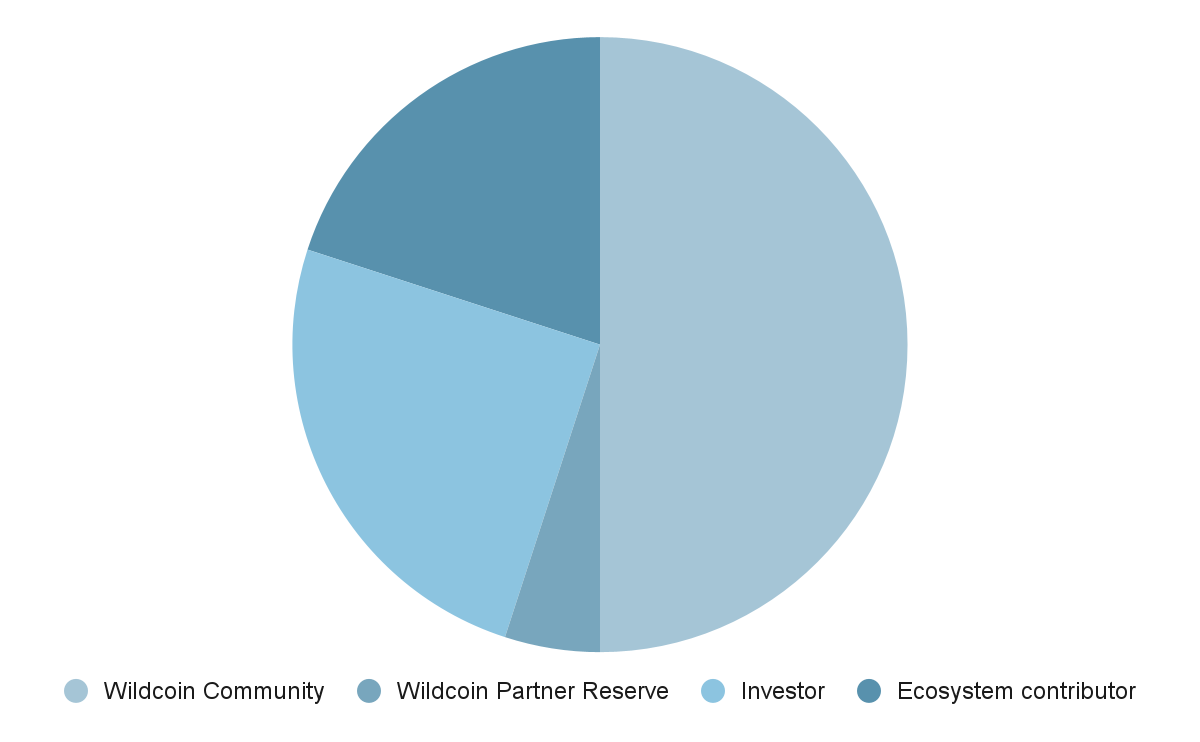
## **Token Distribution Plan**

1. **WILDCOIN community and liquidity: 50%**\
   This pool is designated for the community using the WILD dApp to register and manage ADIDs. The Liquidity Pool provides a stable supply of WILDCOIN to the community and partners.
2. **WILDCOIN Partner Reserve: 5%**\
   This pool is for airdrops to partners expected to be key supporters of WILDCOIN.
3. **Investors: 25%**\
   This pool is reserved for the initial investors in the WILDCOIN project.
4. **Ecosystem contributors: 20%**\
   The WILDCOIN project requires contributions from many parties, including the core team, external service providers, developers, marketing, and other essential activities.

<img src="https://1100465062-files.gitbook.io/~/files/v0/b/gitbook-x-prod.appspot.com/o/spaces%2FH0bZggDiPwW180Ib9C9c%2Fuploads%2FjznrRMEvftuiW82LpqKo%2F8.png?alt=media" alt="WILDCOIN Token Distribution" width="563">

## Transaction Fees <a href="#xrpdtgccsxuc" id="xrpdtgccsxuc"></a>

WILDCOIN transfer fees are designed to be set within a range of 0-0.5% and are set to a maximum of 0.5% for any on-chain transactions. WILDCOIN was designed to be set so that WILDCOIN can adjust these transaction fees based on market conditions. The project will announce any changes to such fees in advance to avoid confusion. However, it should be noted that the maximum allowable fees based on the smart contract settings, which are irrevocable, publicly verifiable, and immutable, are set to 0.5%. Of these transaction fees, 50% will be allocated towards community development, and the remaining will be allocated towards infrastructure development.

## Burn Functionality <a href="#ko7gxeddx28y" id="ko7gxeddx28y"></a>

Token burn functionality is a standard feature of smart contracts. The WILDCOIN smart contract enables any token holder to burn their own tokens. Even if the token burn function was omitted, any holder has the right to send their tokens to a 0x0 address, which is effectively a token burn. The smart contract does not allow the contract owner to burn tokens that are not held and owned by the project. Therefore, users are protected from the contract owner, and they will never have the ability to burn the tokens they hold.


# WILDPOINTS

The WILDPOINTS is a community program for WILDCOIN that aims to enhance user engagement and quantify this engagement to offer measurable benefits to users through the main token, WILDCOIN. The key objectives of WILDPOINTS are to increase user engagement, qualify engagement, and provide benefits to community members. Users receive WILDPOINTS as rewards for transactions, token farming, and community engagement events. WILDPOINTS can be exchanged at a rate of 10:1 for WILDCOIN. This exchange rate may be adjusted in the future based on the price fluctuations of WILDCOIN. Any changes to the exchange rate will be decided by the INU Foundation, which leads the WILDCOIN Project, to align with the objectives of WILDPOINTS. The project has no intention of having WILDPOINTS independently traded or benchmarked to any pair other than WILDCOIN and may only be redeemed through the project directly.

WILDPOINTS (points) will be allocated via two methods: on-chain and off-chain. On-chain rewards will be managed and distributed through a separate smart contract, which will interface directly with the WILDCOIN smart contract. Off-chain token rewards will be managed by collecting community data related to social engagement and using automated scripts to airdrop rewards. Users are responsible for managing and exchanging points, as this will not occur automatically.

The allocation of points is set to 8 billion on-chain and 2 billion off-chain.

A one-time total supply of 10 billion WILDPOINTS will be generated. Users are rewarded with points for buying, staking, and providing liquidity (relating to WILDCOIN)on DEXs such as Uniswap. The issuance rate of WILDPOINTS is 20% of the WILDCOIN transaction amount, and the exchange rate is 1 WILDCOIN: 10 WILDPOINTS.

Tokens converted from points are allocated from the Community Allocation Pool and represent 2% of the initial supply (1 billion WILDCOIN).

In the WILD dApp, various pet-related tasks are assigned, including but not limited to "going for a walk," "giving water," "feeding," "getting vaccinated," "enrolling in insurance," "going out by car," and "having regular check-ups." You can earn points for each of these tasks. Once you collect a certain number of points, your WILD Level increases. As your level goes up, the rate at which you can earn points and exchange tokens also increases.

Various events occur within the community, such as animal photo contests on social media and pet exchange meetings in different regions. Participants in these events can receive points.

Participating in these engagement efforts earns users points and expands the community network. The WILDPOINTS smart contract address is 0x8FD29F4D2279075e46F4B148e1FF004b69a686eb.

***Table 2: WILDPOINTS Tokenomics***

<table data-header-hidden><thead><tr><th width="239"></th><th></th></tr></thead><tbody><tr><td>Launch date</td><td>July 2024</td></tr><tr><td>Network</td><td>OP Mainnet</td></tr><tr><td>Contract Address</td><td>0x8FD29F4D2279075e46F4B148e1FF004b69a686eb</td></tr><tr><td>Total supply (Max)</td><td>Mintable Mint Cap - 100 Billion</td></tr><tr><td>Initial supply: 50%</td><td>10,000,000,000 *Ten Billion</td></tr><tr><td>Price per token</td><td>NA</td></tr><tr><td>Market Cap</td><td>NA</td></tr><tr><td>FDV</td><td>NA</td></tr></tbody></table>


# Go To Market Strategy

The initial target audience for WILDCOIN is pet-owning crypto enthusiasts. Crypto enthusiasts are the most likely contributors to speculative research investments such as WILDCOIN. Pet owners will allow us to spread the word about the project, its focus, and its mission while attracting users who can provide the data required to train our AI models.

## Marketing Challenges <a href="#gyqt9kg7514p" id="gyqt9kg7514p"></a>

The project is being launched at a time of unprecedented content distraction on social media platforms. AI-generated content and engagement bots are flooding social media channels such as X (Twitter), Facebook, Instagram, and Telegram. This flood of content designed to deploy consumer manipulation tactics is shortening attention spans and making it more difficult for projects to spread their message.

*The exploding popularity of “meme” coins has driven crypto-engagement toward increasingly risky behavior among investors and consumers, creating a sense of financial nihilism.*

To spread awareness about the project among crypto-consumers, the project will need to compete with limited attention spans by experimenting with a range of attention-seeking marketing tactics. Such tactics may include posting memes, advertisements, and content designed to capture attention and inform users of the WILDCOIN project, token, and key events such as listing activity.

Audience members will be encouraged to follow the project online, visit our website, and join engagement channels such as Telegram to learn more about the project.


# Notices & Disclaimers

The WILD project is delivering this presentation on a confidential basis. The material, data, and information are for informational purposes only and are not intended to provide tax, legal, or investment advice. Any reproduction or distribution of this presentation, in whole or in part, or the disclosure of its contents to any person (including in any jurisdiction outside the United States) without the Company's prior consent is prohibited. By reviewing this presentation solely for infor­mational purposes, each recipient agrees: (i) to maintain the confidentiality of all information that is contained in this presentation and not already in the public domain, (ii) to use this document for the sole purpose of evaluating the Company, its business, and its prospects, and (iii) not to use the information contained in this presentation for any other purpose.

This presentation should not be relied upon or used to form the basis for any decision, contract, commitment, or action whatsoever with respect to any proposed transaction or for any other purpose. By receipt of this presentation, the recipient and its directors, officers, employees, agents, and affiliates agree to hold this presentation and any oral information provided in connection with it in strict confidence. They may not communicate, reproduce, distribute, or disclose it to anyone or refer to it publicly, in whole or in part, at any time except with our prior written consent. If you are not the intended recipient of this presenta­tion, you are directed to please delete and destroy all copies immediately.

We have prepared this presentation, and the analyses contained in it are based, in part, on certain assumptions and information obtained by us from our directors, officers, employees, agents, affiliates, and/or other sources. Our use of such assumptions and infor­mation does not imply that we have independently verified or necessarily agree with any of such assumptions or information, and we have assumed and relied upon the accuracy and completeness of such assumptions and information provided to us for purposes of this document. No representation or warranty, express or implied, is or will be given by the Company or any of its affiliates, direc­tors, officers, employees, advisers, or any other person as to the accuracy or completeness of the information in this presentation (including as to the accuracy or reasonableness of statements, estimates, targets, projections, returns, prospects, assumptions, or judgments included in the presentation) or any other written, oral, or other communications transmitted or otherwise made available to any party in the course of its evaluation of the Company, and no responsibility or liability whatsoever is accepted for the accura­cy or sufficiency thereof or for any errors, omissions or misstatements, negligent or otherwise, relating thereto. Accordingly, none of the Company or any of its affiliates, directors, officers, employees or advisers, or any other person shall be liable for any direct, indirect, or consequential loss or damages suffered by any person as a result of relying on any statement in or omission from this pre­sentation and any such liability is expressly disclaimed. Any views or terms contained herein are preliminary only. They are based on financial, economic, market, and other conditions prevailing as of the date of this presentation and are, therefore, subject to change. We undertake no obligation or responsibility to update any of the information contained in this presentation.

An investment in the WILD project or any of its affiliates or other investment vehicles intended to invest in the WILD project entails a high degree of risk, and no assurance can be given that such entity’s investment objective will be achieved or that investors will receive a return of their capital. In considering the projected performance information contained herein, you should bear in mind that past or projected performance is not necessarily indicative of future results, and there can be no assurance that any investment vehicle will achieve comparable results or be able to implement its investment strategy or achieve its investment objectives. You should not rely on the WILD project's experience or view of the broad market to make any investment or other decisions related to the WILD project and related entities. The information provided herein is provided “as is” and there is no obligation to make any updates.

This presentation shall not constitute or form part of an offer to sell or the solicitation of an offer to buy any securities of the Com­pany, nor shall there be any sale of any securities of the Company in any state or jurisdiction in which such offer, solicitation or sale would be unlawful before registration or qualification under the securities laws of any such state or jurisdiction.


# References

1. <https://docs.optimism.io/> ↑
2. [WILDCOIN Smart Contract](https://optimistic.etherscan.io/address/0x95EC2f13ea96251C7037EcC0C2A25Ea7D6bE520b#readContract) ↑
3. <https://worldcoin.org/> ↑
4. <https://www.fao.org/pollination/background/bees-and-other-pollinators/en/> ↑
5. <https://www.ipbes.net/> ↑
6. [http://www.fao.org](http://www.fao.org/) ↑
7. <https://www.worldbank.org/en/topic/agriculture/overview> ↑
8. <https://newsinhealth.nih.gov/2018/02/power-pets> ↑
9. [Worldwide Dog Statistics](https://worldanimalfoundation.org/dogs/how-many-dogs-are-in-the-world/#More-Than-471-Million-Dogs-Are-Kept-as-Pets-Worldwide) ↑
10. American Pet Products Association (2023-2024) ↑
11. <https://www.forbes.com/advisor/pet-insurance/pet-care/how-much-does-vet-visit-cost/> ↑
12. <https://www.aspca.org/helping-people-pets/shelter-intake-and-surrender/pet-statistics> ↑
13. <https://www.aspca.org/helping-people-pets/shelter-intake-and-surrender> ↑
14. <https://www.scirp.org/Journal/PaperInformation?PaperID=60176> ↑
15. R. M. Park, M. E. Gruen, and K. Royal, “Association between Dog Owner Demographics and Decision to Seek Veterinary Care,” Vet. Sci., vol. 8, no. 1, p. 7, Jan. 2021, doi: 10.3390/vetsci8010007. ↑
16. M. Lem, “Barriers to accessible veterinary care,” Can. Vet. J., vol. 60, no. 8, pp. 891–893, Aug. 2019. ↑
17. C. Bir, M. Ortez, N. J. Olynk Widmar, C. A. Wolf, C. Hansen, and F. B. Ouedraogo, “Familiarity and Use of Veterinary Services by US Resident Dog and Cat Owners,” Animals, vol. 10, no. 3, Art. no. 3, Mar. 2020, doi: 10.3390/ani10030483. ↑